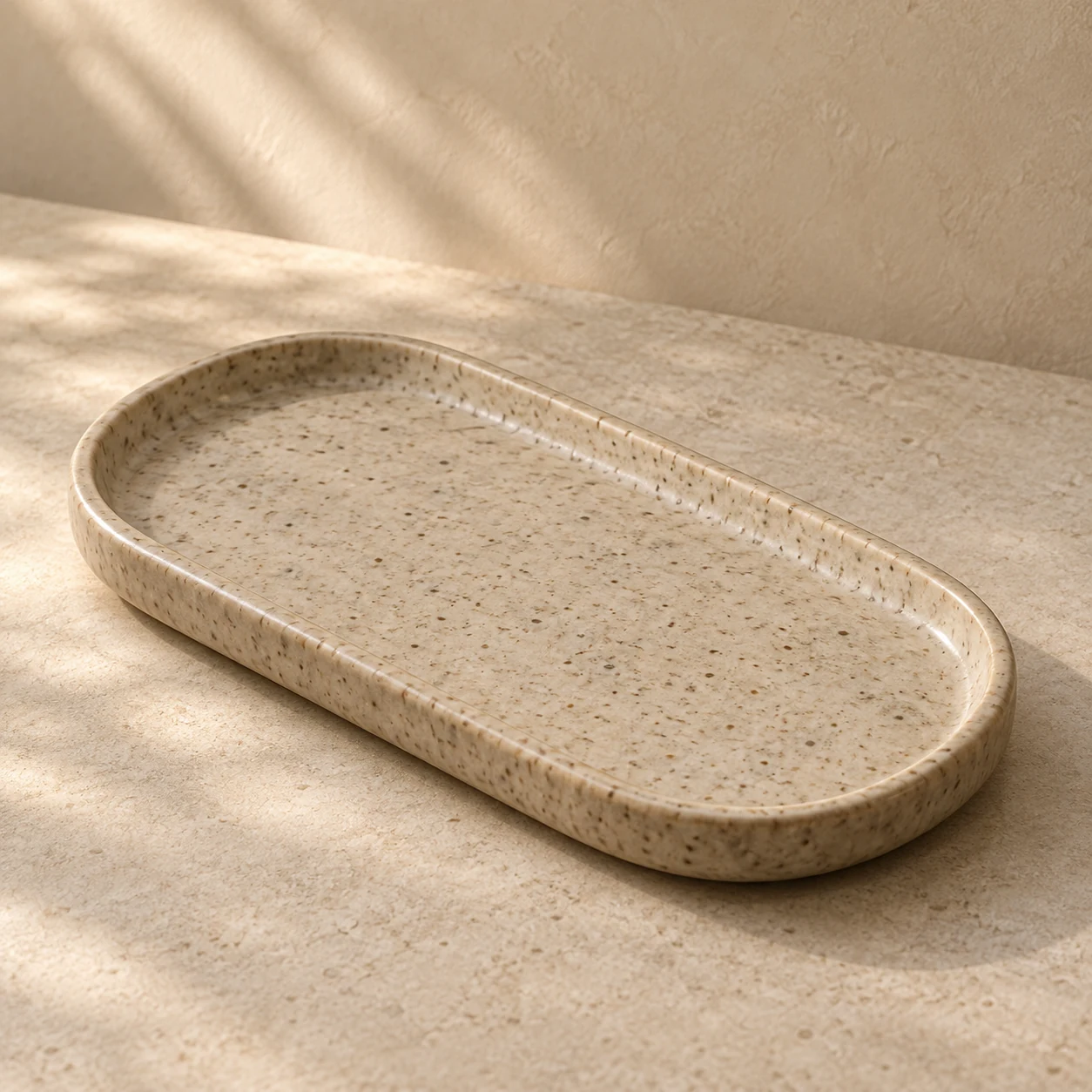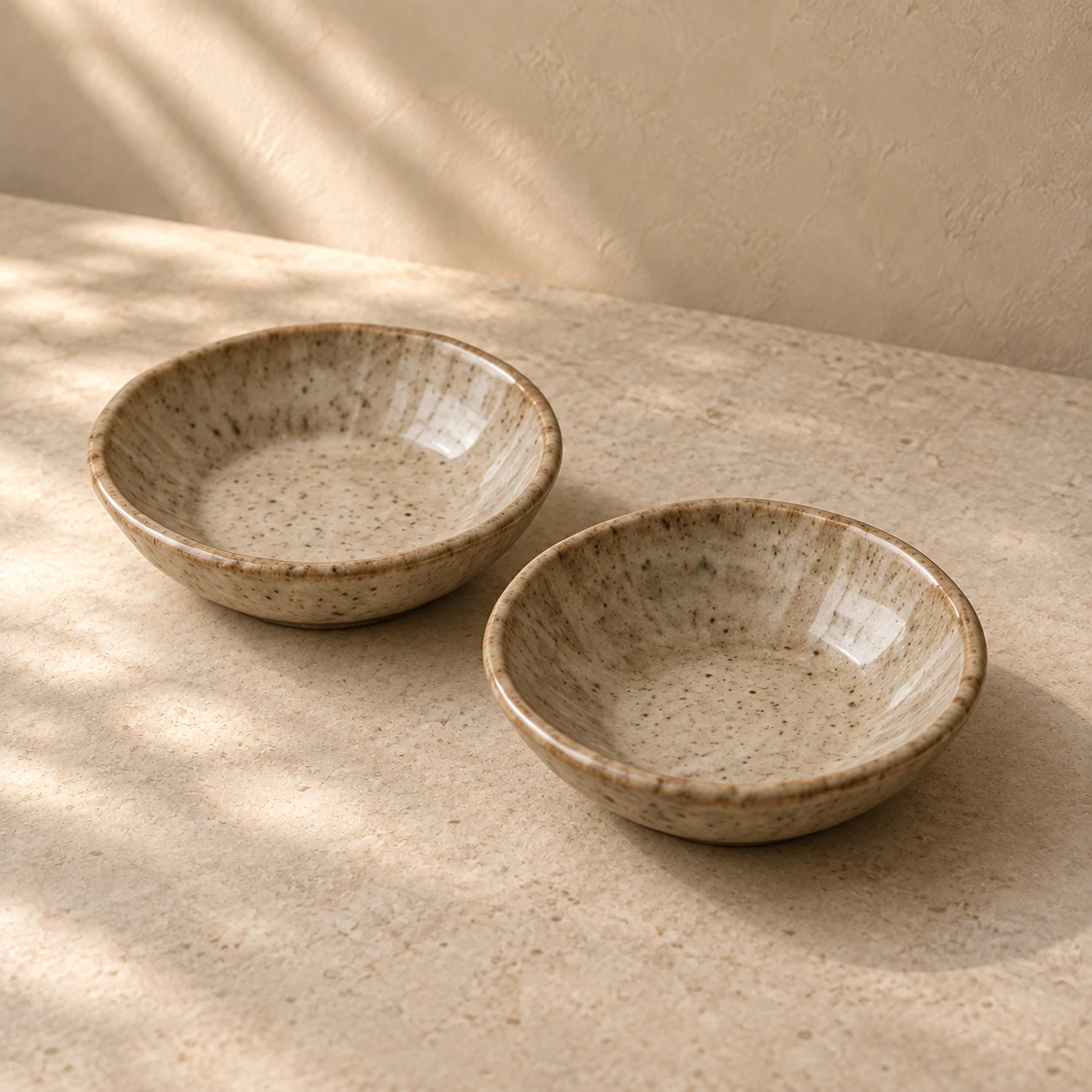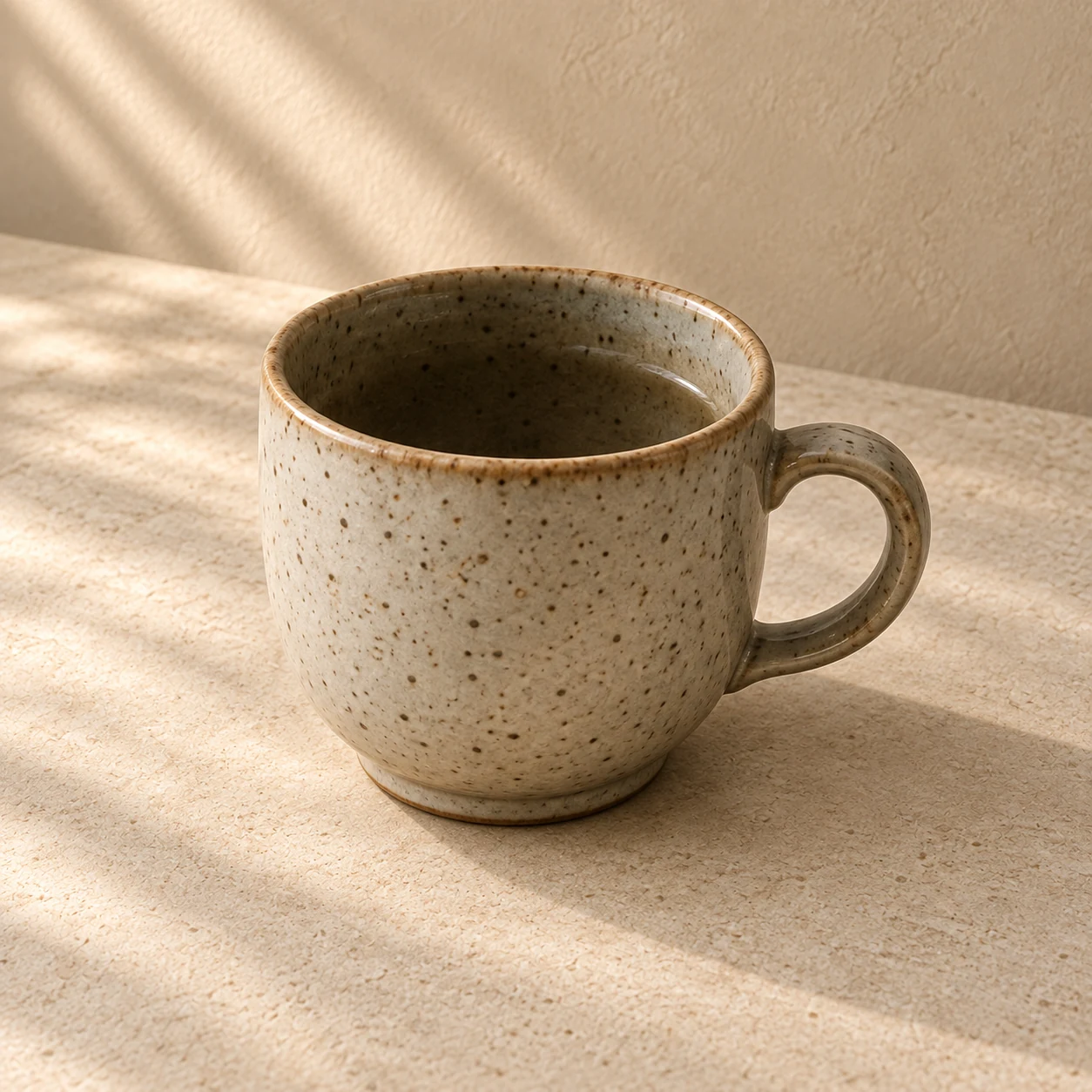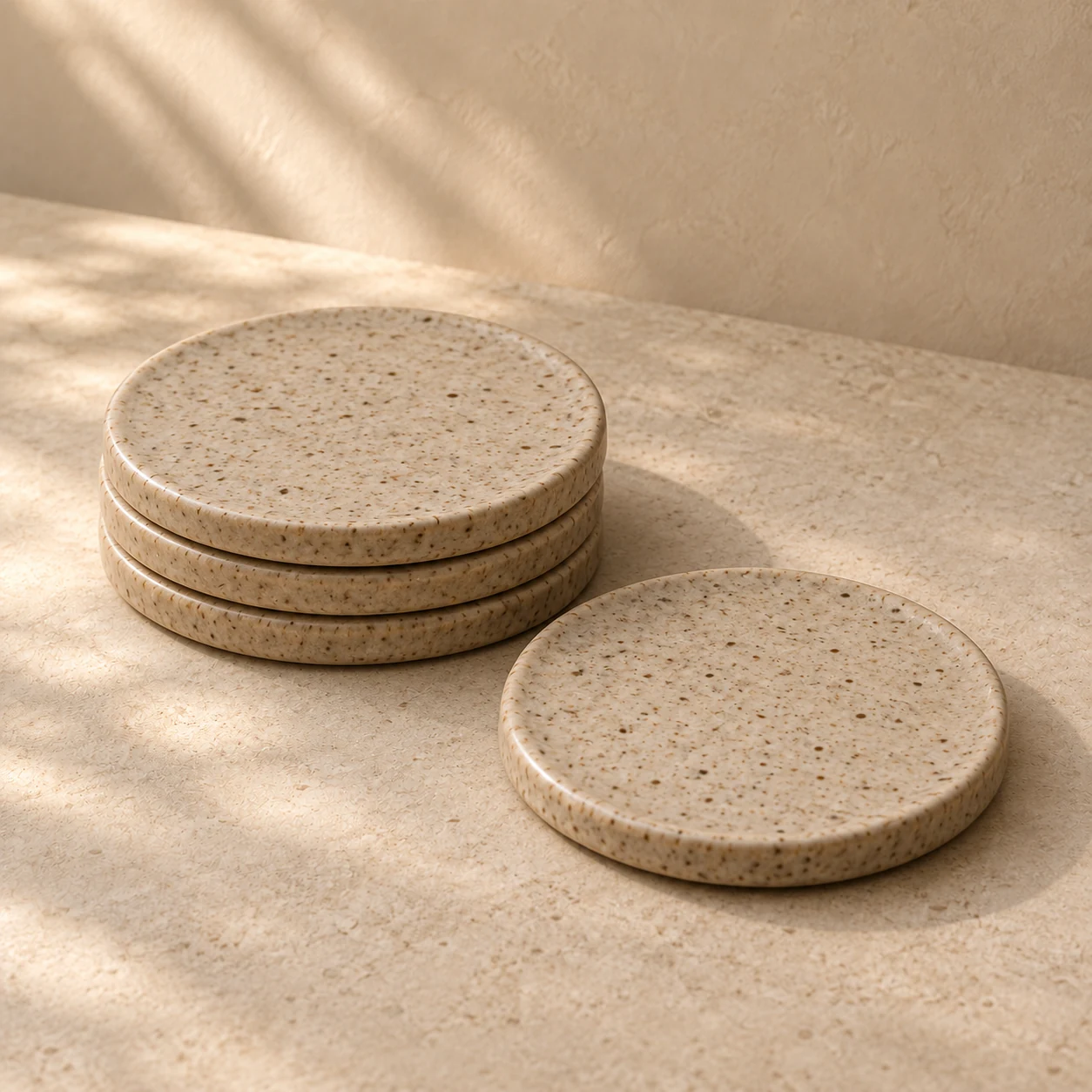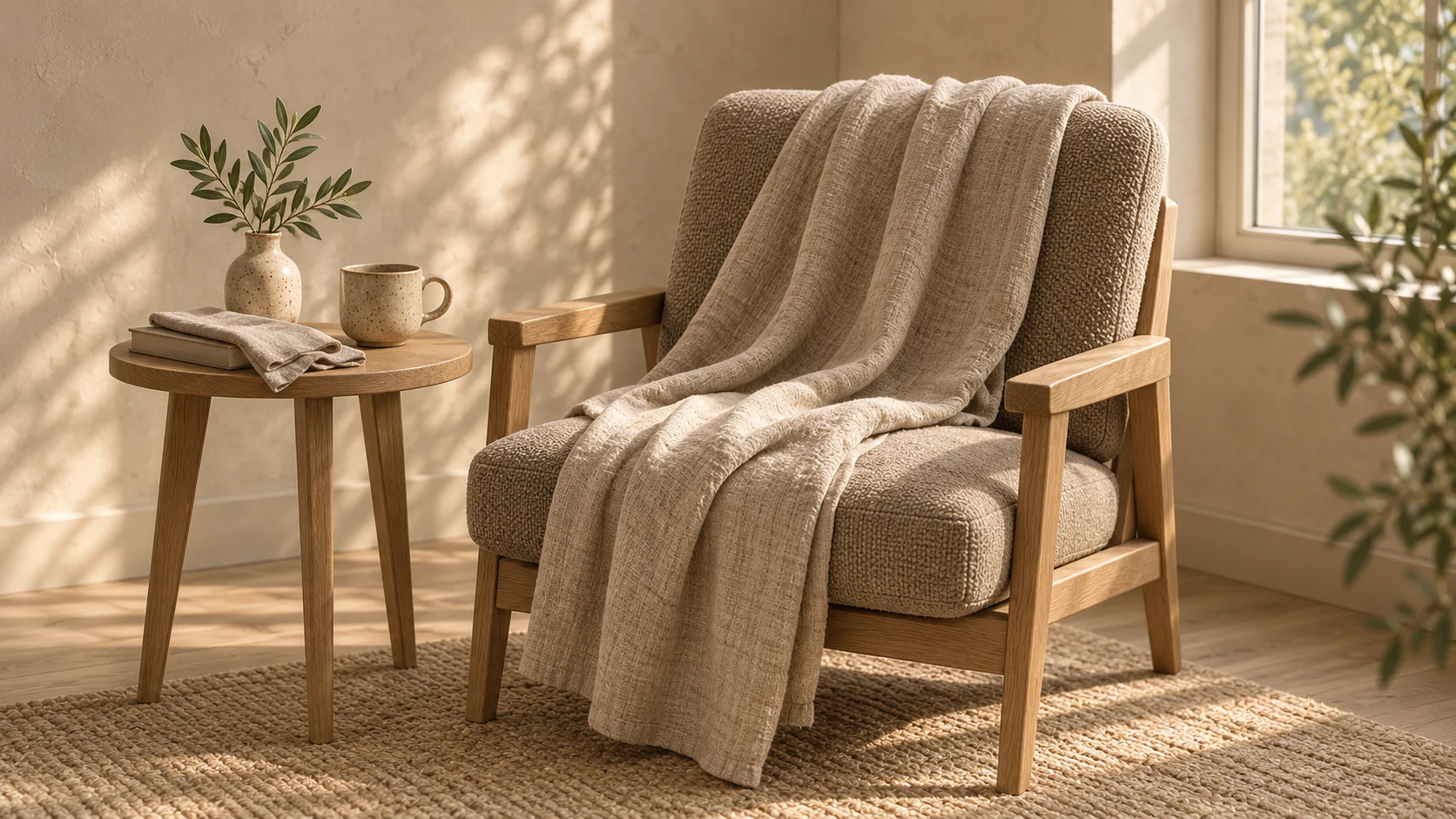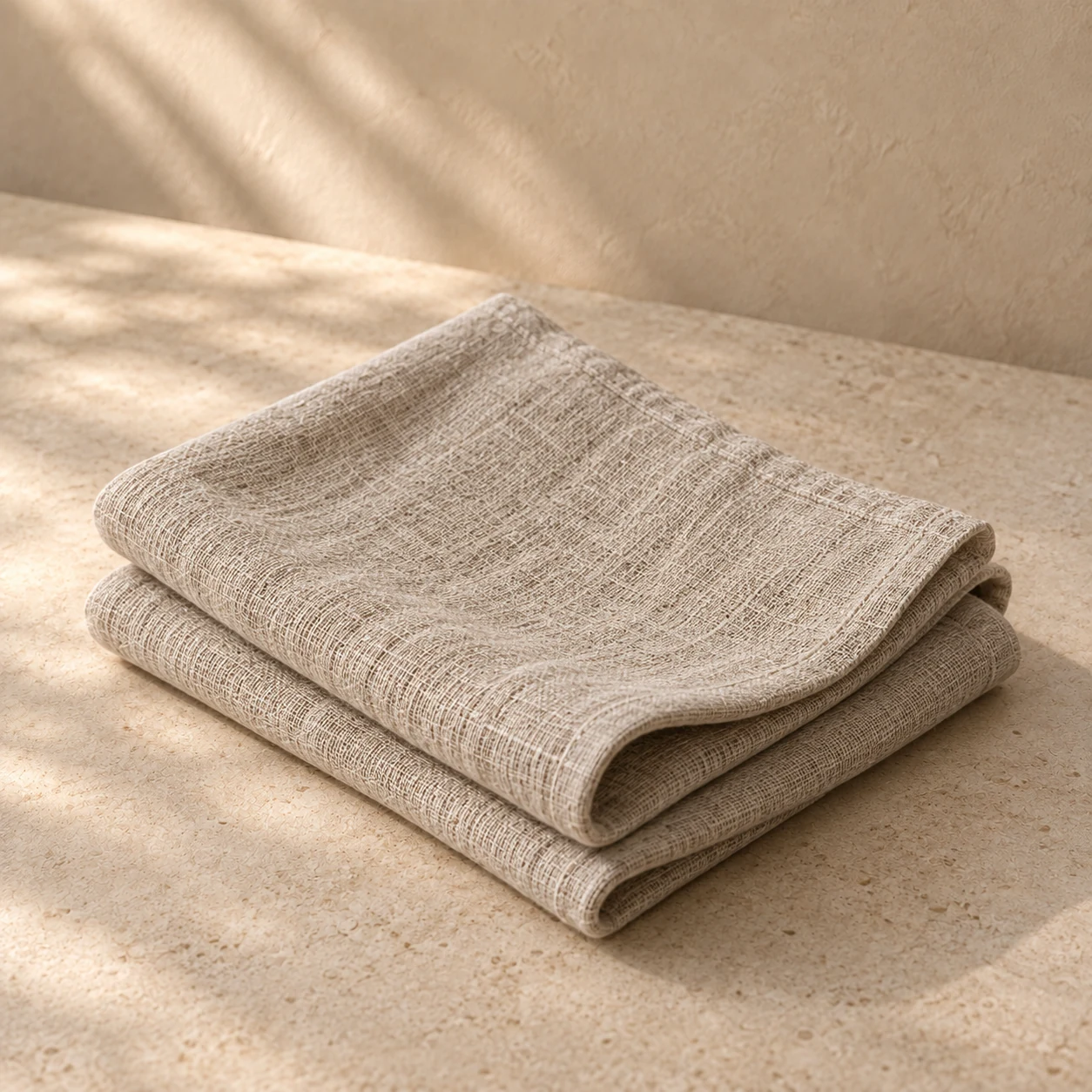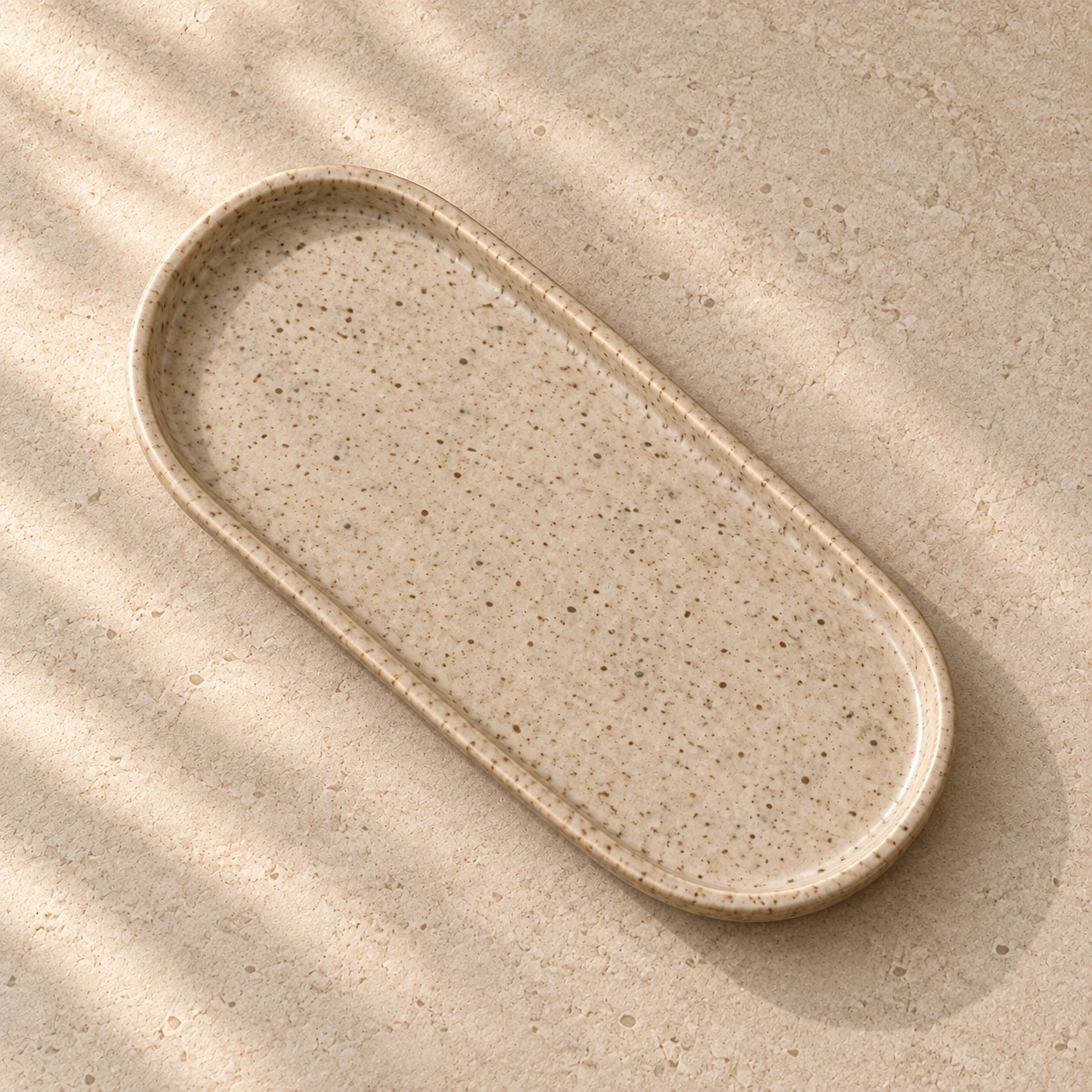
A tray is a small boundary for the things you use often. Choose it around those things, and around the space you want to leave clear, before choosing the finish.
Start with its everyday purpose
For an entry shelf, think about keys, a small dish and the objects you set down when you arrive. For a tea corner, place your cup and coaster together before measuring. A tray should gather what you already use, with enough room to lift each piece comfortably.
Keep the arrangement simple. If you have to remove several objects to reach the one you need, choose fewer pieces or a more generous surface.
Measure the surface, then choose a size
The Small Soft Edge Table Tray is 8.5 inches long by 5.5 inches wide. The Regular is 11 by 7 inches. Both have a low 0.75-inch edge. Mark those footprints on your shelf or table and leave space around them for your hand and the rest of the surface.
Small suits a compact landing place. Regular gives a cup and a few companion objects more room. The two sizes share the same glaze options and photo gallery; check the written dimensions when comparing them.
Choose a glaze that lives with the room
Clay Speckle brings a light, textured surface. Warm Stone sits comfortably beside warm woods and natural linen. Soft Sage adds a muted green tone to the setting. Look at the overhead, side and close-up views to understand the edge and surface, rather than choosing from a small color swatch alone.
Daylight and screen settings can change how a glaze appears. Use the photographs as a guide to the overall tone, and allow for gentle variation in the surface.
Make care part of the choice
Hand wash the stoneware with mild soap and dry it with a soft cloth. Avoid sudden temperature changes. When moving a tray, support its base and remove unstable objects first. A tray that is easy to use and care for will settle naturally into your daily rhythm.
“Choose the tray for the objects you reach for, and the space around them.”STILLDAY JOURNAL